The Legendary 1958 Zunow Reflex
"But, now, we Zunow have persistently, elaborately, at last, completely solved all these problems; and this Zunow Single lens Reflex Camera is believed to be far superior than all other rangefinder system cameras." (Zunow Press Release Jan 1st 1958)
"Legendary" is much debased word, frequently applied to cameras that are merely expensive. Examples of outstanding mechanical & optical craftsmanship they may be, but the stuff of legends? Simply, untrue!
I believe that the Zunow Reflex is one of the very few cameras that can be truly classed as "legendary". Myths about this camera and its place in history have arisen because so few people have even seen, let alone, handled one. As a popular "mythology" is at the heart of all good legends, I think the term applies! Like the "Yeti", travellers tell of its existance, but search as you will, there is little hard evidence and no pictures are available. (other than a rather poor illustration from a pre-publicity leaflet) This all explains why the Zunow has become such a legend amongst SLR camera enthusiasts.
The starting point for my "journey of discovery" were two articles by Stephen Gandy and the owner of Pacific Rim Cameras. They tell of the origins of Teikoku Optical Industries (precursor to the Zunow Optical Industry Co ltd), its high quality Leica screw thread lenses and the anouncement of a "Super Fast" f1.1 lens in 1953. Both articles give quite a detailed specification of the Zunow camera, but alas, no pictures.
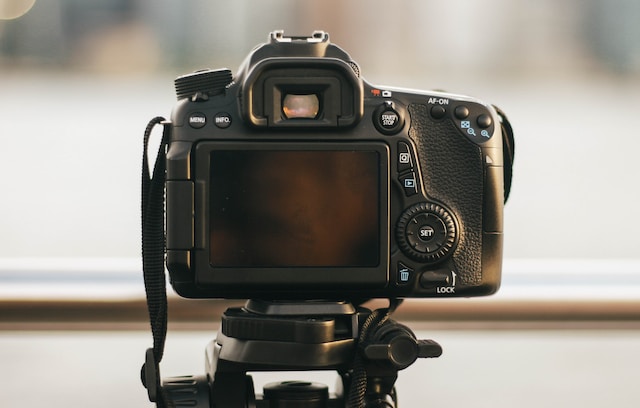
The photos* you see here are unique, the owner acceeded to my request not only to photograph the camera as a whole, but to show all the important details that make it so special. These pictures are probably as near as you are going to get to this particular camera in your lifetime. So you can, for the first time, see one of the "Holy Grails" of Camera Collectors and more to the point - if you have sufficient cash - you can even buy it. This is, undoubtedly, one of the most important "milestone" cameras of all time - the one that first spelt out to the photographic world, the Rangefinder era is over.
Certainly Zunow SLRs are very rare, they don't normally turn up at auction, or at your neighbourhood classic camera shop, most are sold privately through collector to collector contact. Stephen Gandy says "Perhaps Zunows are more common in Japan, but in the US where they were never officially imported, they are next to impossible to find".
However there is always one dissenting voice - especially when passing judgement on rarity! That well known expert on antique cameras, Peter Loy remarked to me "but not as rare as the French Malik SLR". I have to concur with that, for I can't find anything on the internet about the Malik, or anybody who knows anything about it, or has even seen one! Take it from me, the Zunow is rare, verging on the extremely rare. Stephen Gandy reckons that a "hand built assembly line achieved the blazingly fast production rate of eight cameras per day" and estimates a "few hundred" were built. Given the usual attrition rate of cameras in daily use compounded by the failure of the manufacturer a year after the product was launched, the Zunow survival figure is not going to be impressive.
It may look familiar, but that's because it set the style that others followed - in particular the Nikon F1. As Pacific Rim states "The camera was styled very conventionally, well, what would be conventionally after everyone else got their cameras to market" even simple details such as the Speed selector influenced others long afterwards "The other is the speed dial underneath the wind lever, a design which popped up on a much later, very popular camera, the Canon AE-1"
In the end they were proved right, first by Nikon, then Minolta, Topcon & Canon who "lifted" many of the ideas that Zunow had pioneered
Thanks to Peter Loy, the original Press Release is also seen here for the first time. It clearly sets out why the Zunow's designers believed their camera had "Revolutionary new innovations and refinements".
Zunow's designers believed the photographic public's main objections to the adoption of the SLRs were:
What they regarded as the "real" breakthrough was: "in-between speeds are possible to set depending on the actual light conditions and the subject matter to be shot" "This in-between system should be the greatest improvements ever made, we can assure you"
From this day onwards the days of rangefinder superiority were numbered. The last technical obstacle to the wholesale adoption of a more versatile viewfinding system was gone. Henceforth the rise of the SLR was continuous. That is the importance of the Zunow, it inspired other designers to follow a new line of attack. Henceforth it was the Japanese and not the German Camera Industry that were pacemakers.
Next Page - Zunow Specification
Footnote: (from Nikon's History Glossary)
ZUNOW 5cm f/1.1 This lens first appeared in 1953, developed by Mr. HAMANO, Michisaburo, who had come to Nippon Kogaku K.K. from the navy and would later move on to Teikoku Optical Industries (later Zunow). The ZUNOW 5cm f/1.1 has five (5) groups and nine (9) lenses, with a Sonner-type M39 mount (39mm diameter, 1/26-inch thread screw) and Nikon "S" mount.
In 1955, Mr. KUNIMI, Kenji who had come from Nippon Kogaku K.K., and Mr. FUJIOKA, Yoshisato, who had come from Yashima Kogaku K.K., improved upon this design using new optical glass in a four (4)-group, nine (9)-lens structure. Subsequent revisions yielded the 5cm f/1.3 lens.
So Two Nikon designers leave for Zunow in the early fifties. One wonders if they moved back to Nikon to develop the F?
Sylvain Hasgard's French Translation of this page
Copyright Text: Paul Winter - Photographs: Richard Wheatley - 6th May 2005
Please note, reproduction of these unique photographs is not permitted without the express permission of Richard Wheatley